
 |
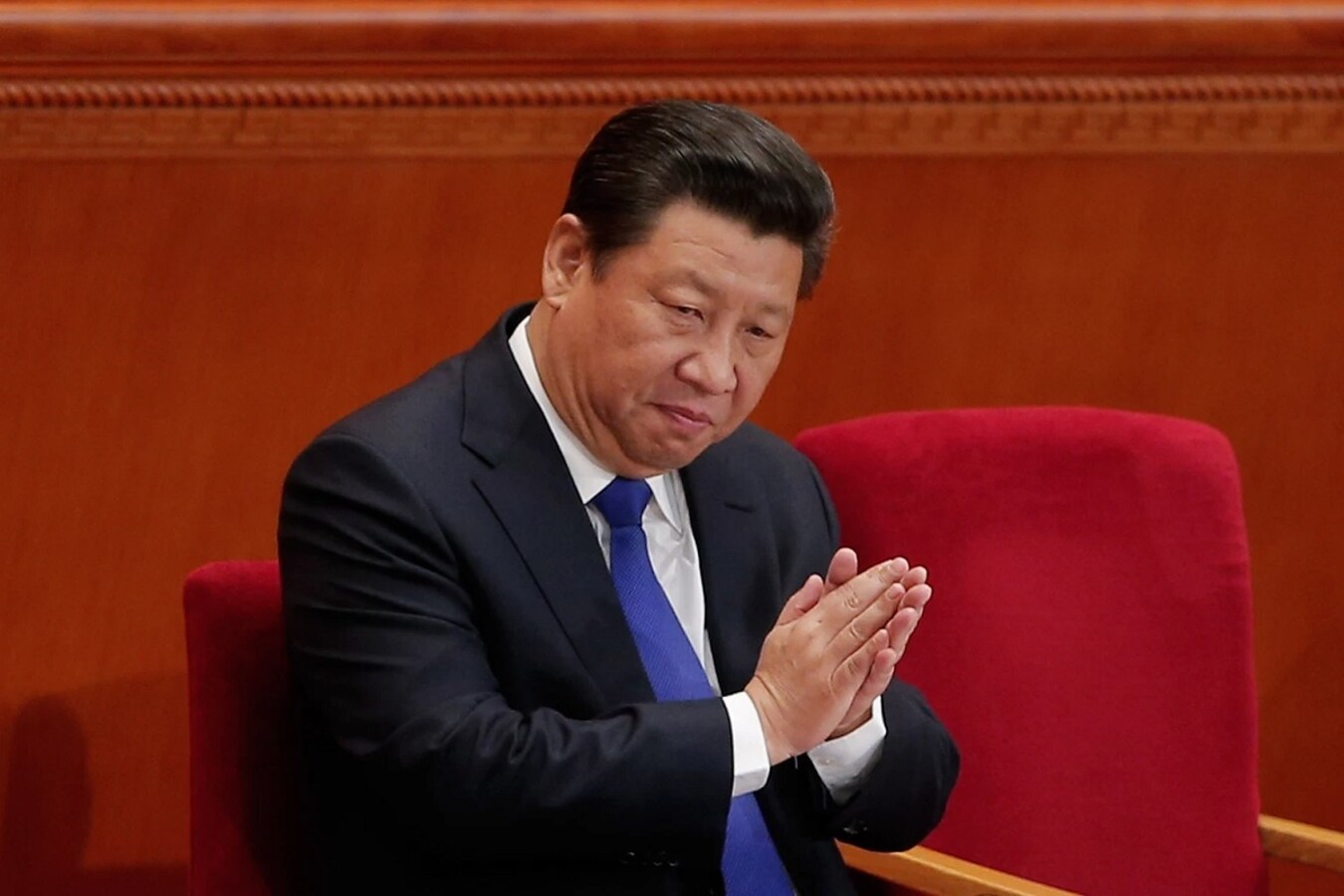
| Chinese President Xi Jinping Source: Reuters |
The Indian Express
China’s rubber-stamp parliament, the National People’s Congress (NPC), begins its annual session on Sunday and is expected to unveil the biggest government reshuffle in a decade as Beijing confronts a host of issues at home and abroad.
Coming months after President Xi Jinping secured a norm-breaking third term as supreme leader, the sessions will further consolidate his authority and outline key government policy goals, including an annual economic growth target sources say could be as high as 6%.
What is the NPC?
The 3,000-member NPC is China’s national legislature, and in principle the most powerful state body under the Chinese constitution, although in practice the ruling Communist Party wields more power.
Besides meeting annually to deliberate legislation and appoint government personnel, it oversees the State Council, China’s cabinet.
Its top body, the roughly 170-member NPC Standing Committee, meets more frequently to pass legislation. The Standing Committee also has the power to amend semiautonomous Hong Kong’s mini constitution, known as the Basic Law.
The NPC meetings overlap with those of the Chinese People’s Political Consultative Conference (CPPCC), a political advisory body. Together, the annual meetings are known as the lianghui, or “Two Sessions”, and usually last between one and two weeks.
Which government positions will be filled? In the biggest personnel change, Li Qiang is poised to be confirmed as premier after being ranked second in order after Xi when the new seven-member Politburo Standing Committee was revealed at October’s congress of the ruling Communist Party.
Li will make his public debut during a televised media conference on the final day of the session, where he will answer questions that have been submitted in advance.
The Print
China’s rubber-stamp parliament, the National People’s Congress (NPC), begins its annual session on Sunday and is expected to unveil the biggest government reshuffle in a decade as Beijing confronts a host of issues at home and abroad.
Coming months after President Xi Jinping secured a norm-breaking third term as supreme leader, the sessions will further consolidate his authority and outline key government policy goals, including an annual economic growth target sources say could be as high as 6%.
Here are key details and issues to look out for:
WHAT IS THE NPC?
The 3,000-member NPC is China’s national legislature, and in principle the most powerful state body under the Chinese constitution, although in practice the ruling Communist Party wields more power.
Besides meeting annually to deliberate legislation and appoint government personnel, it oversees the State Council, China’s cabinet. Its top body, the roughly 170-member NPC Standing Committee, meets more frequently to pass legislation.
The Standing Committee also has the power to amend semiautonomous Hong Kong’s mini constitution, known as the Basic Law. The NPC meetings overlap with those of the Chinese People’s Political Consultative Conference (CPPCC), a political advisory body. Together, the annual meetings are known as the lianghui, or “Two Sessions”, and usually last between one and two weeks.
WHICH GOVERNMENT POSITIONS WILL BE FILLED?
In the biggest personnel change, Li Qiang is poised to be confirmed as premier after being ranked second in order after Xi when the new seven-member Politburo Standing Committee was revealed at October’s congress of the ruling Communist Party.
Li will make his public debut during a televised media conference on the final day of the session, where he will answer questions that have been submitted in advance.
Several top economic jobs will go to a new crop of Xi loyalists, many with little overseas exposure, replacing an older generation of officials viewed as more reform minded.
Xi confidant He Lifeng is expected to become vice premier overseeing the economic portfolio, while top state bank official Zhu Hexin is likely to replace Harvard-educated Yi Gang as central bank governor, sources have told Reuters.
The NPC will also appoint top government positions including vice president, NPC chair, vice premiers, state councillors, head of the Supreme Court and ministers. Xi himself will be confirmed in his third presidential term.
WHAT WILL BE DISCUSSED?
The NPC will discuss Xi’s plans for an “intensive” and “wide-ranging” re-organisation of state and Communist Party entities, state media reported on Tuesday without giving details of the changes. Analysts expect the revamp to further deepen Party penetration of state organs.
The NPC will also review draft amendments to China’s Legislation Law, which include authorising emergency lawmaking by the NPC Standing Committee and requiring constitutional scrutiny of laws before they are passed, according to Changhao Wei, fellow at Yale Law School’s Paul Tsai China Center.
News18
China on Wednesday began its politically significant annual Parliament season, amid mounting political and economic challenges in the aftermath of the coronavirus pandemic and the growing adversity with the US over a host of issues including, Taiwan, Tibet, Xinjiang and Hong Kong.
The gathering of China’s political elite is taking place ahead of this year’s centenary celebrations of the ruling Communist Party of China (CPC) and increasingly assertive leadership of President Xi Jinping. Xi, 67, has established himself as the most powerful leader after Mao Zedong with prospects of life-long tenure in power following scrapping of two-year tenure rule for the Presidency.
Every year in March, the full sessions of the National People’s Congress (NPC), the country’s parliament and the advisory body the Chinese People’s Political Consultative Conference (CPPCC) hold their sessions with full members totaling over 5,000 legislators and advisors.
The CPPCC will begin its week-long session from Thursday which will be attended by Xi and other leaders while the NPC kicks off its meeting from March 5. The political season began on Wednesday with a nationally televised press conference by its spokesman.
During this year’s meeting, the NPC, often described as a rubber stamp parliament for its routine approval of the CPC proposals, is set to endorse the 14th Five Year plan and the plan for Long-Range Objectives Through the Year 2035.
While the 14th Five-Year plan envisages a massive overhaul of the country’s domestic market to boost consumption in order to reduce China’s reliance on shrinking exports markets, the Vision 2035 visualises a long-term plan, reflecting the development vision outlined by president Xi. China’s status as a world’s factory has been affected by declining global markets and the trade war initiated by former US president Donald Trump, followed by his successor Joe Biden as well, by his move to ban of Chinese tech firms like Huawei, TikTok and restrictions on exports of semiconductor chips to China deepening the technology conflict between top two world economies.
The relations between the US and China are at an all-time low. The two countries are currently engaged in a bitter confrontation over various issues, including trade, the origins of the novel coronavirus pandemic, the communist giant’s aggressive military moves in the disputed South China Sea and human rights violations in Xinjiang and Hong Kong. China is also expected to increase about seven per cent of its defence budget which last year was 1.268 trillion yuan (close to USD 200 billion), according to report in state-run Global Times. It is over three times higher than India’s defence budget of USD 47.4 billion.